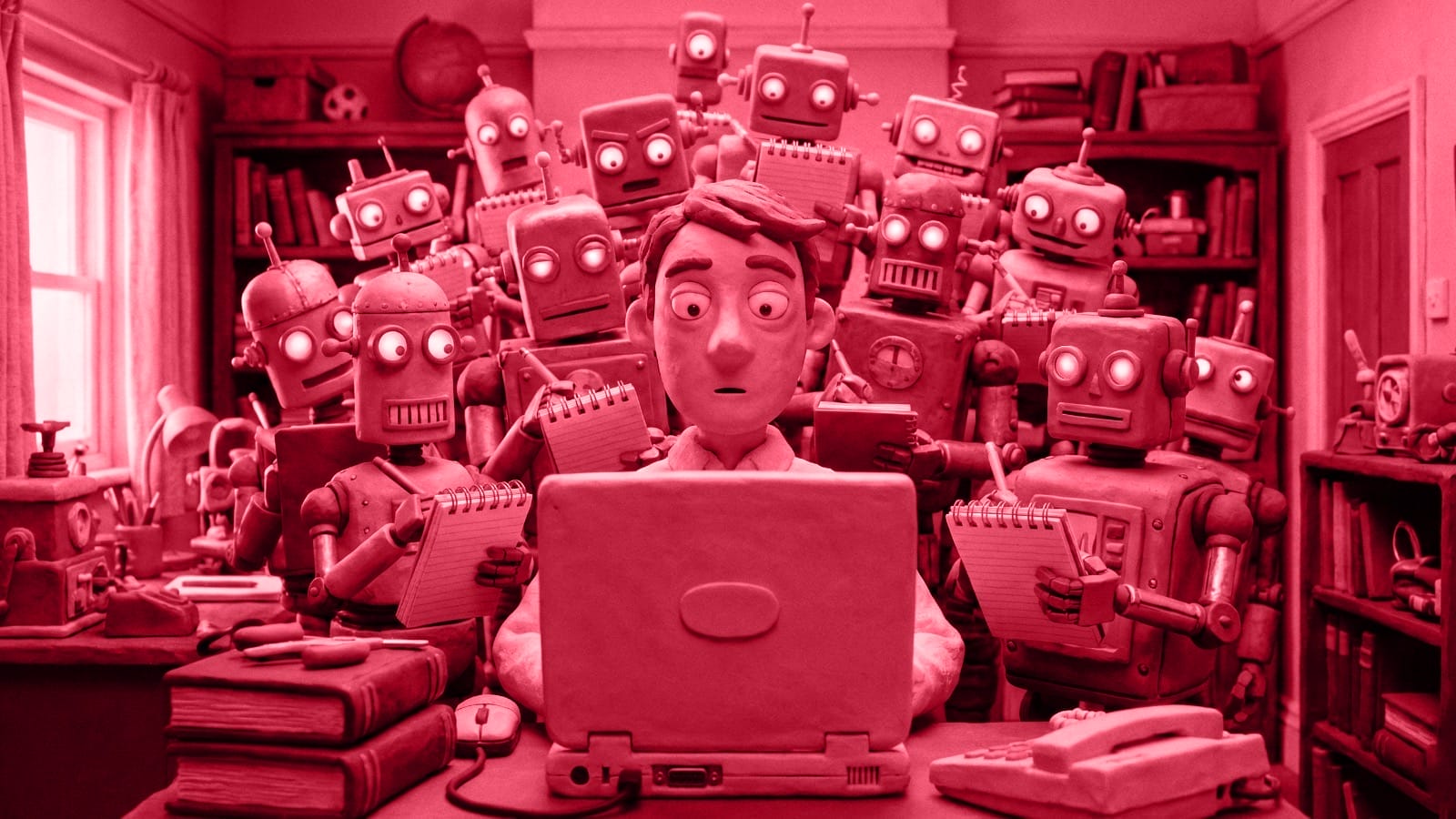
The slop problem: Why your AI-generated content looks like everyone else’s

AI-generated content often feels generic and unreliable, resembling “toys” rather than professional tools. Replit CEO Amjad Masad identifies the core issue: Everything looks the same, from images to code, Taryn Plumb reports for VentureBeat. The problem, known as “slop,” stems from lazy prompting and a lack of individual flavor. Masad believes platforms must expend more …

Read more

The benchmarks AI companies brag about are obsolete: Here’s what’s replacing them

Artificial Analysis has overhauled how the AI industry measures intelligence, replacing traditional benchmarks with tests that measure whether AI can complete actual work tasks. Michael Nuñez reports for VentureBeat. The independent benchmarking organization removed three widely cited tests from its Intelligence Index, including MMLU-Pro and AIME 2025. The new version 4.0 introduces 10 evaluations focused …

Read more

Why Instagram’s boss says you should post ugly photos to prove you are human

Adam Mosseri, the head of Instagram, believes it will soon be more practical to verify authentic media than to detect AI-generated content. Karissa Bell reports for Engadget that Mosseri expects synthetic imagery to overtake human-made content on social platforms. This shift forces a rethink of how apps identify what is real. Mosseri suggests that the …

Read more

AI channels rake in $117 million while flooding YouTube with low-quality videos

More than 20% of videos recommended to new YouTube users consist of low-quality AI-generated content designed solely to generate views and revenue, according to new research. Video-editing company Kapwing surveyed 15,000 of the world’s most popular YouTube channels and identified 278 that contain exclusively “AI slop”, Aisha Down reports for The Guardian. These channels have …

Read more

Silicon Valley faces growing disconnect between AI builders and skeptical public

Silicon Valley’s AI enthusiasts are frustrated with public skepticism, but they may be missing the point. While industry insiders celebrate what they see as near-miraculous advances, many ordinary people view AI progress with anxiety or indifference. Sharon Goldman reports for Fortune that the disconnect stems from fundamentally different perspectives. What AI builders frame as thrilling …

Read more

Why Amazon’s billion-dollar business model faces its biggest AI threat yet

Amazon faces a critical decision about AI-powered shopping agents that could reshape the e-commerce industry. The company must choose whether to fight these tools or embrace them as partners. Annie Palmer reports for CNBC that Amazon CEO Andy Jassy has watched competitors like OpenAI, Google, Perplexity and Microsoft release AI agents that allow consumers to …

Read more

39C3 Talk: How Wikipedia battles AI-generated articles

Mathias Schindler, a longtime Wikipedia contributor and co-founder of Wikimedia Germany, reports on a troubling discovery at the 39C3 conference in Hamburg. While developing a tool to check ISBN checksums in German Wikipedia, he uncovered a significant problem: articles containing completely fabricated literature references generated by large language models. The issue emerged when Schindler found …

Read more

AI researcher identifies six major paradigm shifts in large language models during 2025

The development of large language models has undergone fundamental changes in 2025, marked by new training methods and surprising capabilities that reveal a fundamentally different form of intelligence than expected. AI researcher Andrej Karpathy writes on his blog about six major shifts that defined the year. The most significant change involves a new training technique …

Read more

The telltale signs that AI wrote your email, essay, or news article

Artificial intelligence has developed a distinctive writing style that readers are learning to identify almost instantly. From student essays to corporate communications, AI-generated text carries unmistakable markers that reveal its algorithmic origins. Sam Wolfson writes about this for the New York Times. He describes how AI writing relies heavily on specific patterns: the “It’s not …

Read more

How AI companies are teaching language models to admit their mistakes

Two major tech companies are tackling one of artificial intelligence’s most persistent problems: getting AI systems to stop making things up or hiding their mistakes. OpenAI and Amazon have each developed distinct approaches to make large language models more honest and reliable. OpenAI’s thruth serum OpenAI researchers introduced a technique called “confessions” that functions like …

Read more