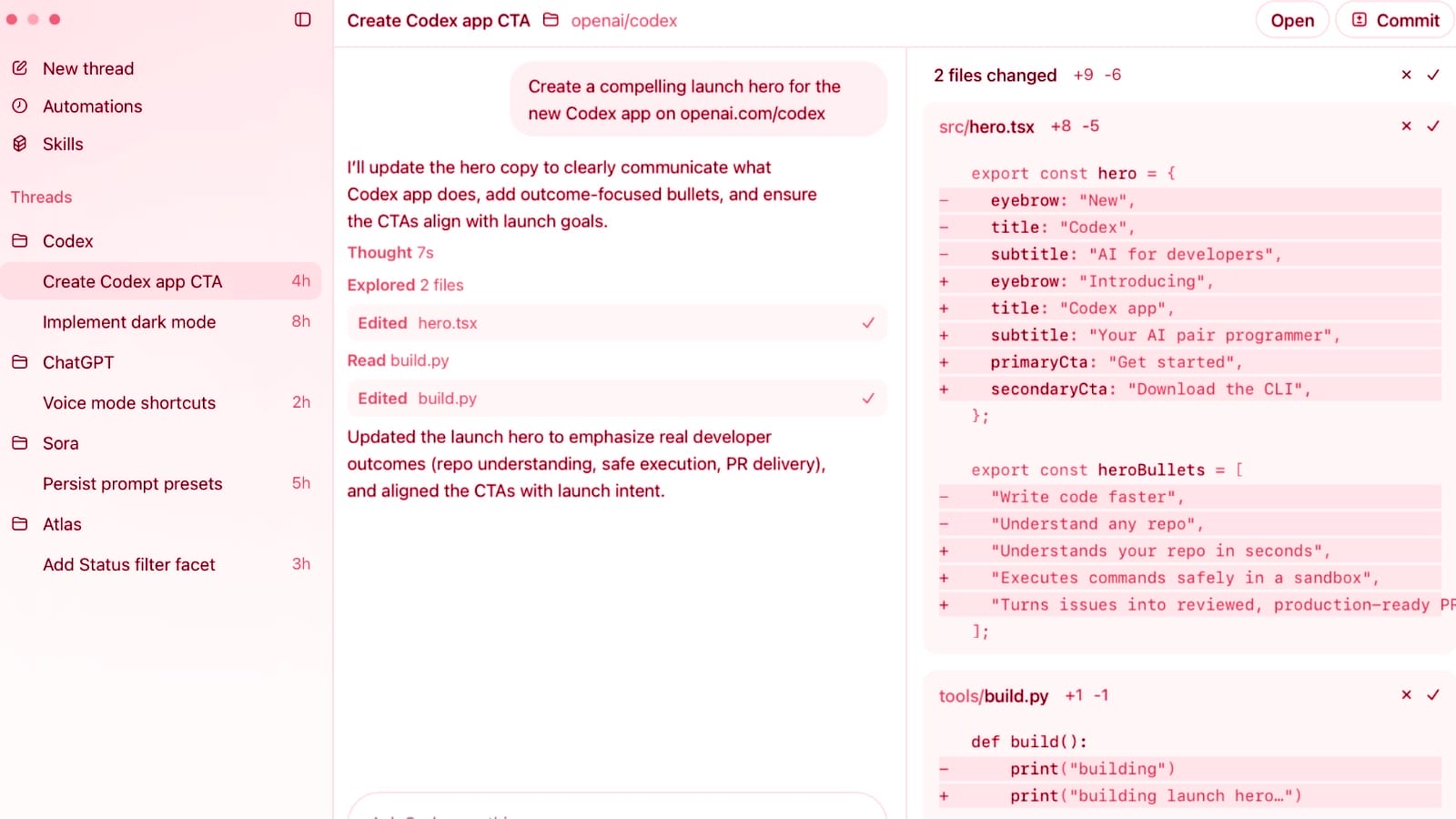
OpenAI’s AI agent Codex has grown far beyond its origins as a tool for software developers. According to two new publications from OpenAI, the system now counts more than 5 million weekly active users and is increasingly used by professionals across industries to handle the routine, time-consuming work of modern office life.
OpenAI writes and details in an accompanying report that user numbers have grown more than sixfold since the launch of the desktop app in February. While developers remain the largest group, knowledge workers now account for roughly 20 percent of users and are adopting the tool more than three times as fast as developers.
What knowledge workers actually use Codex for
The data paints a clear picture of how non-technical professionals are putting the tool to work. Each week, 72 percent of knowledge worker users produce documents, spreadsheets, presentations, contracts, or multimedia assets. Nearly half engage in what OpenAI calls engineering operations, such as building small scripts or automating repetitive workflows, even without a formal technical background.
The fastest-growing task categories among this group are:
- Data analysis, up 110 percent week over week
- Research, up 37 percent
- Knowledge artifact creation such as reports, memos, and contracts, up 36 percent
OpenAI describes this as a blurring of the boundary between software work and knowledge work. A product manager builds a dashboard instead of requesting one from an engineering team. A researcher writes her own data-cleaning script. A designer ships a prototype without involving a developer. The person closest to the problem builds the solution directly.
Parallel tasks and the shift in how people work
One of the more striking findings concerns how users run Codex. About 50 percent now run more than one task simultaneously at some point during the day, up from less than one third in mid-April. OpenAI argues this shift from sequential to parallel use allows a single worker to operate at the scale of a small team.
The report places this development in a broader historical context. Knowledge work, which now accounts for more than 40 percent of US employment, has long been plagued by what OpenAI identifies as three core frictions: the difficulty of finding relevant information across fragmented systems, the cost of coordinating work across tools and teams, and the burden of getting work approved and verified. Previous generations of software reduced the cost of producing documents but multiplied the number of documents that needed to be reviewed. OpenAI argues Codex addresses the problem differently by handling search, coordination, production, and quality checks together.
The report includes several case studies. A mathematics professor at California State University uses Codex to automate course administration in his learning management system, saving an estimated four to five hours per week. A small fleet management startup uses it to turn customer conversations into working product demos. A civic tech company uses it to make public government meeting data searchable across roughly 90,000 government bodies. One individual user built a personal hearing compensation app after describing his specific hearing loss to Codex in plain language.
OpenAI also addresses the policy dimension. The report calls on governments to treat AI fluency as basic economic infrastructure, fund hands-on training through schools and public institutions, and update procurement rules so agencies can adopt tools that solve operational problems rather than simply purchase software licenses. The report states that the benefits of AI agents should not be limited to large firms.
Sources
Stay up to date
AI for content creation: the latest tools, tips and trends. Every two weeks in your inbox:

