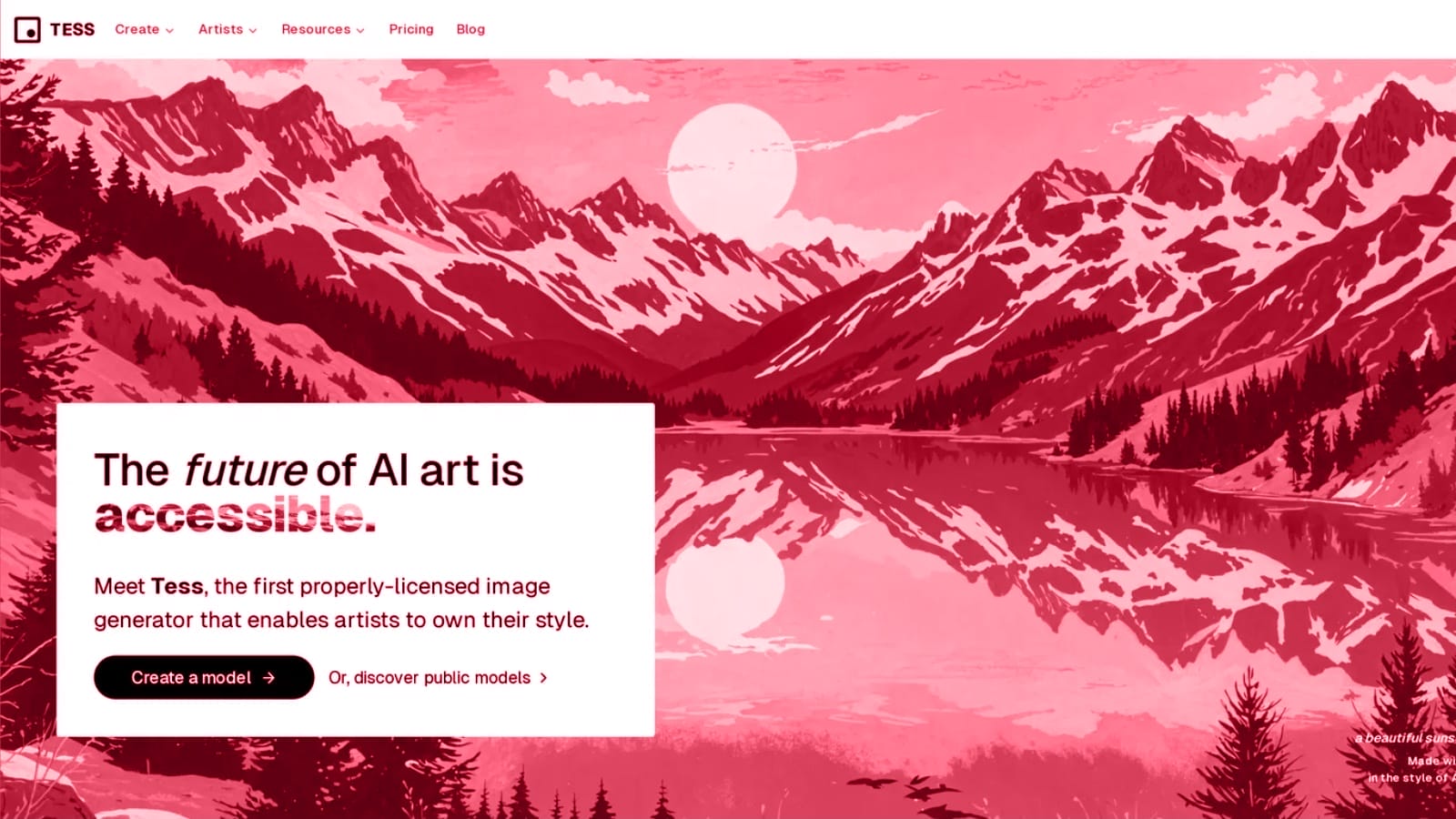
The AI image marketplace Tess.Design paid artists a 50% royalty each time their style was used to generate an image. Julia Enthoven writes how the platform ran for 20 months before closing in January 2026.
Tess.Design allowed artists to submit their work to fine-tune an AI model. That model was then listed on a public marketplace. Subscribers paid for access and artists earned half the revenue generated from their model.
The platform generated $12,172 in gross revenue. Kapwing, the company behind it, had paid out $18,000 in advance royalties, resulting in a net loss of roughly $7,000 before accounting for staff time.
Artist recruitment proved difficult. Kapwing contacted 325 artists. Only 6.5% agreed to join. Many refused on ideological grounds. Others feared brand dilution or damage to their reputation by association with AI.

Legal uncertainty was another major obstacle. A large US media outlet considered signing an enterprise contract but its legal team blocked the deal. Unresolved copyright litigation made any AI licensing product too risky.
Enthoven draws several lessons for founders. Creator supply is harder to build than demand. Controls over how a style is deployed matter to artists. Cultural attitudes toward AI are shifting currently, which could reduce friction for future attempts.
Kapwing has moved core Tess features into its main product and says it is open to selling the Tess.Design domain.

