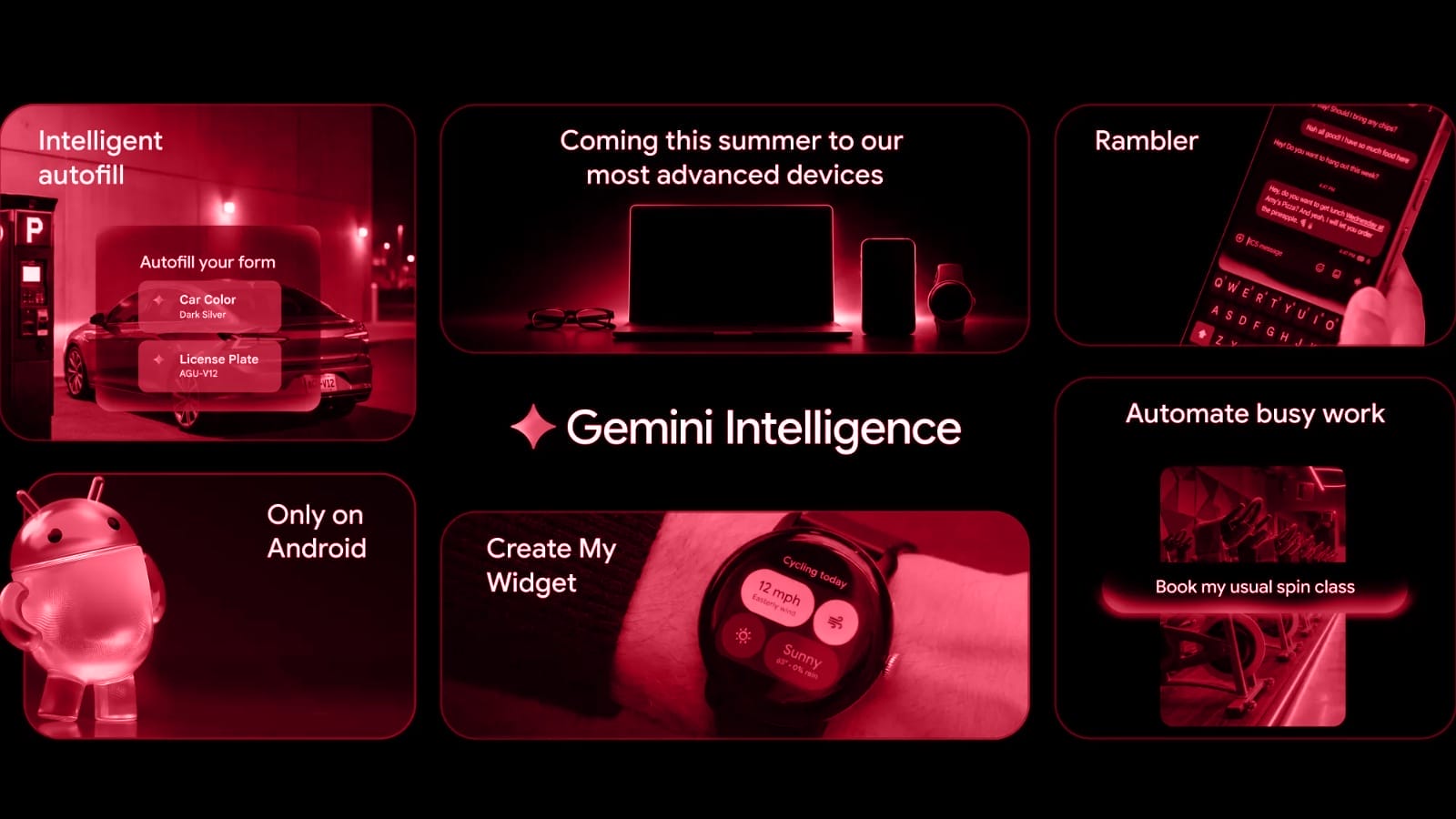
Google has announced a set of new features for Android 17, grouping several artificial intelligence capabilities under the name Gemini Intelligence. The company says the features are designed to help users complete everyday tasks with less manual effort. According to Google, Gemini Intelligence will begin rolling out on Samsung Galaxy and Google Pixel phones, with support for other devices, including watches, cars, glasses, and laptops, to follow later in the year.
A central focus of the announcement is task automation. Gemini can already operate certain apps on behalf of users on some Pixel and Samsung Galaxy devices, but has so far been limited to a small number of food delivery and rideshare applications. Google says this will expand to a wider range of apps. Users will also be able to give Gemini visual context, such as a screenshot or photo, to guide its actions. In one example provided by Google, a user can point Gemini at a grocery list on screen and ask it to add all items to a delivery cart.
Google is also bringing Gemini into the Android version of Chrome. Starting in late June, users will be able to ask Gemini questions about webpage content directly inside the browser. Subscribers to Google’s AI Pro or Ultra plans will additionally get access to a feature called auto browse, which can complete tasks like booking appointments on behalf of the user.
Autofill on Android is also getting a Gemini upgrade. Users can choose to connect Gemini to the autofill system, allowing it to draw on information from connected apps like Gmail and Google Photos to fill out forms automatically. Google describes this as strictly opt-in.
Other Gemini Intelligence features include:
- Rambler: A voice-to-text tool that cleans up natural speech, removes filler words, and supports multiple languages within a single message.
- Create My Widget: A tool that lets users describe a custom widget in plain language, and then generates it for the home screen. Widgets also carry over to Wear OS watches.
On the creative side, Android 17 introduces Screen Reactions, which lets users record themselves alongside their screen simultaneously. Google has also partnered with Meta to improve the Instagram experience on Android, including better photo and video quality when uploading. New AI-powered tools are coming to Instagram’s Edits app, including a one-tap video enhancement feature and audio separation. Adobe Premiere is also coming to Android, though no release date was given. A new professional video format called APV, developed with Samsung, is available on select flagship devices.
Google presented these features at its Android Show event ahead of Google I/O.
Sources: Google Blog, Google Blog, The Verge
Stay up to date
AI for content creation: the latest tools, tips and trends. Every two weeks in your inbox:

