OpenAI unveils new developer tools for building AI agents

OpenAI has released a new suite of tools designed to help developers build AI agents similar to the company’s own Deep Research and Operator. The new offerings include the Responses API and the open-source Agents SDK, which provide developers with the building blocks to create AI applications that can search the web, analyze files, and …


Read more

Chinese AI agent Manus generates hype but faces scrutiny over capabilities

Manus, an AI agent developed by Chinese startup Butterfly Effect, has generated significant buzz in the tech world. Described as “the first general AI agent” capable of autonomously executing complex tasks, Manus has been hailed by some as China’s second “DeepSeek moment” – referring to the earlier breakthrough when Chinese AI model DeepSeek R1 outperformed …

Read more

How to use ChatGPT Deep Research in Marketing

Deep Research is one of those offerings that you have to try for yourself to really understand what it is all about. At least, that’s how it was for me. Right after my first experiment with it, I was amazed and thought: This could change my work almost as much as ChatGPT itself has already …

Read more

OpenAI launches GPT-4.5 model

OpenAI has officially launched GPT-4.5, its newest and largest AI language model to date. The model, previously known internally as “Orion,” is being released as a research preview with claims of enhanced conversational abilities, reduced hallucination rates, and improved emotional intelligence compared to previous models. While OpenAI positions GPT-4.5 as its “largest and best model …

Read more

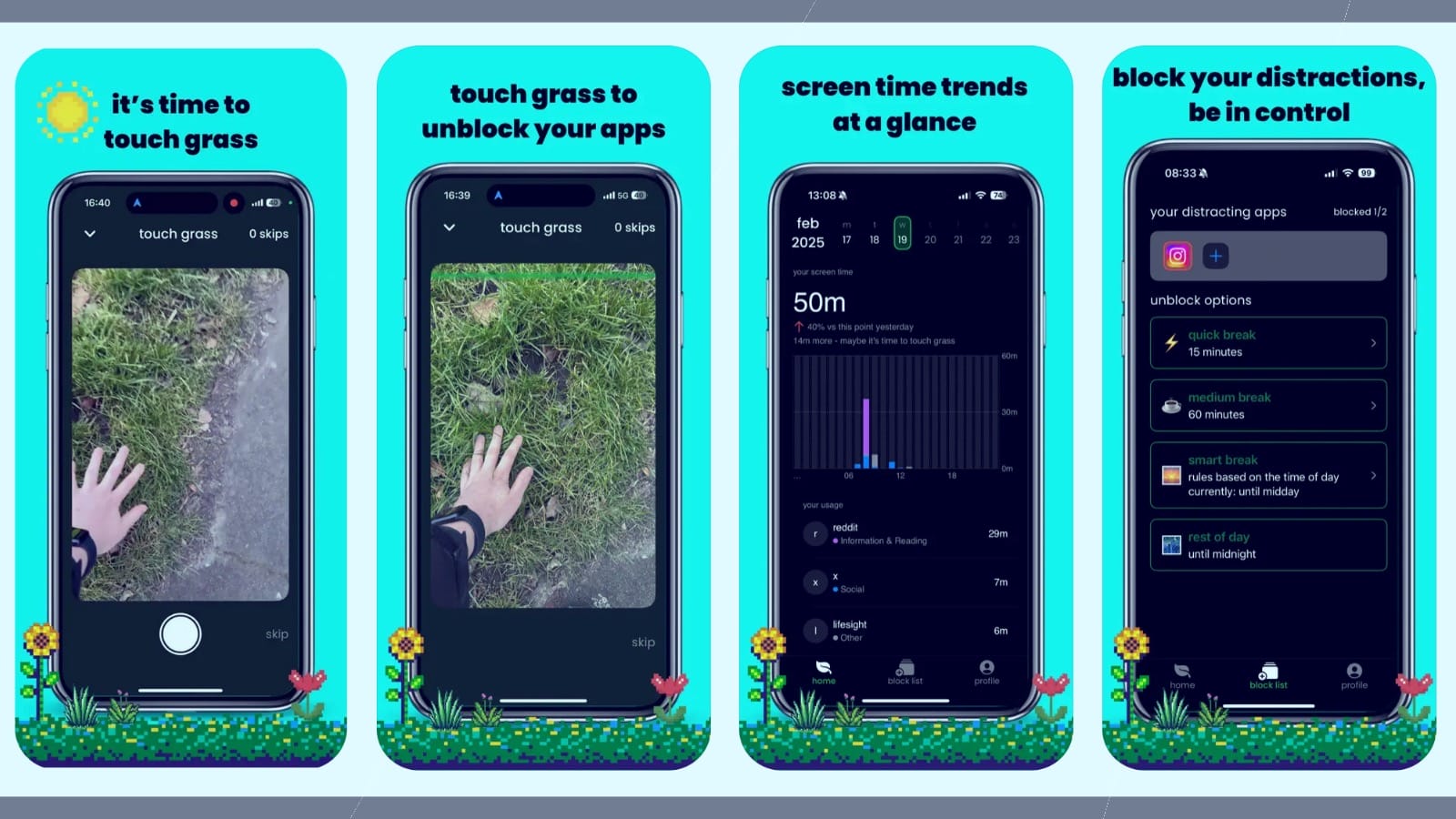
App “touch grass” blocks distractions until users connect with nature

A new iOS app called “touch grass” helps users break screen addiction by blocking their most distracting applications until they physically touch grass and verify it through the app’s computer vision technology. The app aims to help people reclaim their time from mindless scrolling in a tongue-in-cheek way while encouraging connections with nature. Basic features …

Read more

AI reasoning capabilities show both impressive strengths and surprising limitations

Recent developments in AI reasoning capabilities reveal a complex picture of artificial intelligence that excels at certain complex tasks while failing at seemingly simple problems, according to an analysis by Sigal Samuel published in Vox. The article examines claims by leading AI companies about their models’ ability to perform genuine reasoning. OpenAI and other companies …

Read more

Claude 3.7 Sonnet has customizable reasoning capabilities

Anthropic has introduced Claude 3.7 Sonnet, positioning it as the first hybrid AI reasoning model that combines quick responses with extended thinking capabilities. The model allows users to choose between immediate answers and more thorough analysis, with API users having precise control over the model’s thinking time up to 128,000 tokens. Key Features and Capabilities …

Read more

Understanding Reasoning AI: What it is, how to use it

As creative professionals, we’ve already witnessed how generative AI has transformed the way we create content, design visuals, and develop ideas. Now, there’s a new player in the field: Reasoning AI. Unlike traditional AI models that excel at pattern recognition or generating content, Reasoning AI models are designed to approach problems through logical analysis and …

Read more

Perplexity launches affordable AI research tool challenging enterprise pricing models

Perplexity has introduced Deep Research, a new AI-powered research tool that performs comprehensive analysis at a fraction of the cost of existing enterprise solutions. The system conducts multiple searches across numerous sources to generate detailed reports in approximately 2-4 minutes, a task that would typically take human experts several hours. According to Perplexity, the tool …

Read more

Essay explores ethical implications of training AI on internet’s collective works

A comprehensive analysis examining the ethics of using the internet’s collected works to train large language models has been published by Robin Sloan, addressing fundamental questions about the morality and implications of this practice. The essay asks whether it is ethically acceptable to use humanity’s collective written works – what Sloan terms “Everything” – as …

Read more